The harmonica is the best-known and most popular instrument in the world. That's why it was desirable and even necessary to create an organisation which will bring adepts together on an international basis.
The originators of this idea met in Trossingen on October 2nd and 3rd 1950 and representatives of no less than ten different countries took part in the Constitutive Meeting. These countries were: Belgium, France, Eire, Germany, North Africa, North Ireland, South Africa, Spain, Switzerland and UK.
It was agreed to found the FIH (Fédération Internationale de l'Harmonica).
The assembly examined the project statutes, and then the project was unanimously adopted.
One of the essential FIH tasks is to promote harmonica in the international spheres of music. An appropriate work plan had been decided during the assembly. It included advertising for recruitment, the foundation of national organizations and preparation of World Harmonica Championships...
The first World Harmonica Championships took place in Duisbourg (Germany) 1953, followed by Strasbourg (France) in 1954, Winterthur 1955, Rotterdam 1956 (Holland), Luxembourg 1957, Pallanza (Italy) 1958, Innsbruck (Austria) 1959, Barcelona (Spain) 1960, Strasbourg (France) 1963, Delft (Holland) 1965, Karlsruhe (Germany) 1967, Winterthur (Switzerland) 1969, Eindhoven (Holland) 1971, Ypres (Belgium) 1973, Offenbourg (Germany) 1975. People generally admit that during that period the championships were more European than worldwide because of an inadequate international communication.
As a result, these European meetings inevitably ended with a harvest of European gold medals (and others): 8 gold medals for Germany, 2 for Italy, 2 for England, 2 for France (Jean Leleu in 1954 and Nicole Jordy in 1965), one for Spain and one for Austria (Franz Chmel in 1963).
Then, a crossing desert period succeeded to this first period (a few European competitions, more often in Germany, excepted).
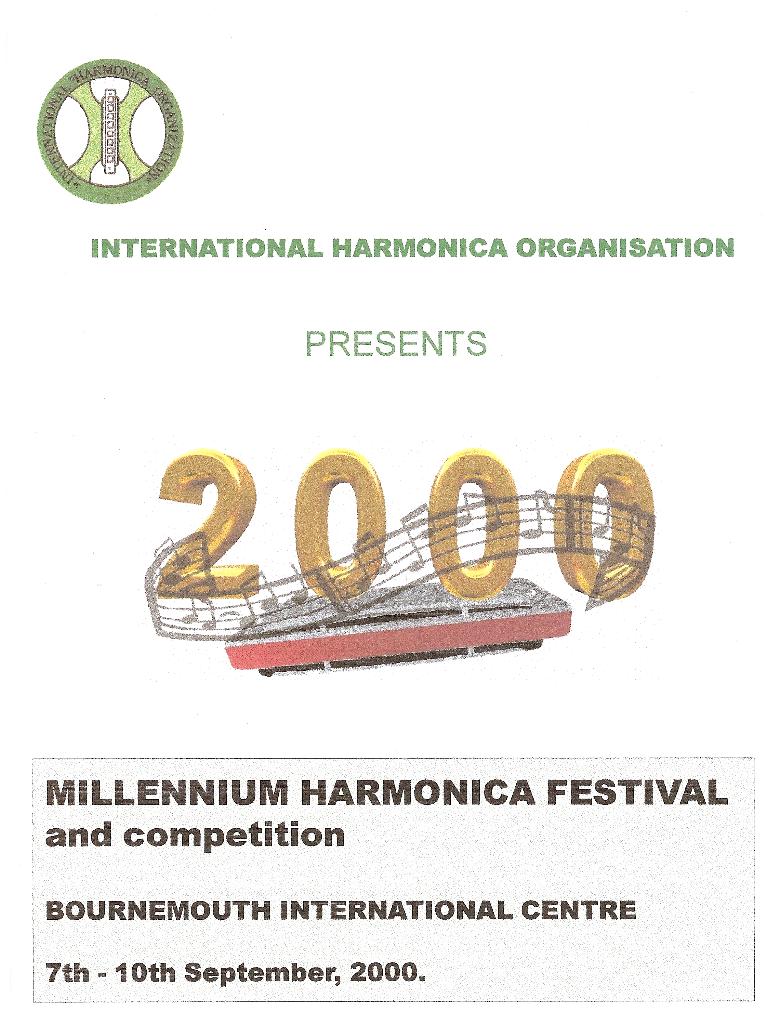
Eighties and nineties will give a new world dimension to the World Harmonica championships, due to the creation of the IHO (International Harmonica Organisation) founded by Peter Janssen, Holland (President), and Norm Dobson, USA (Vice-President), associated to FIH!
After these events things have changed... People coming from everywhere have now a chance to win a medal in a real world championship, for instance: Chong Ah Kow (Malaysia) who won a gold medal in Trossingen (1989).
In 1990 Jean Labre, France Harmonica Founder President, joined IHO. He became IHO Vice President for Europe and also IHO ambassador, in association with, for the Far East Area, with Yasuharu Mano (Japan Vice President) who made a very good job, rallying to IHO 7 countries (China, South Korea, Hong Kong, Malaysia, Philippines, Singapore, Taiwan).
FIH and IHO decided to organize International Championships to each his turn, every two years.
One year in Trossingen, the following year in a country chosen by IHO.
The championships have been organised since 1991 in the following countries:
- 1991: Detroit (USA)
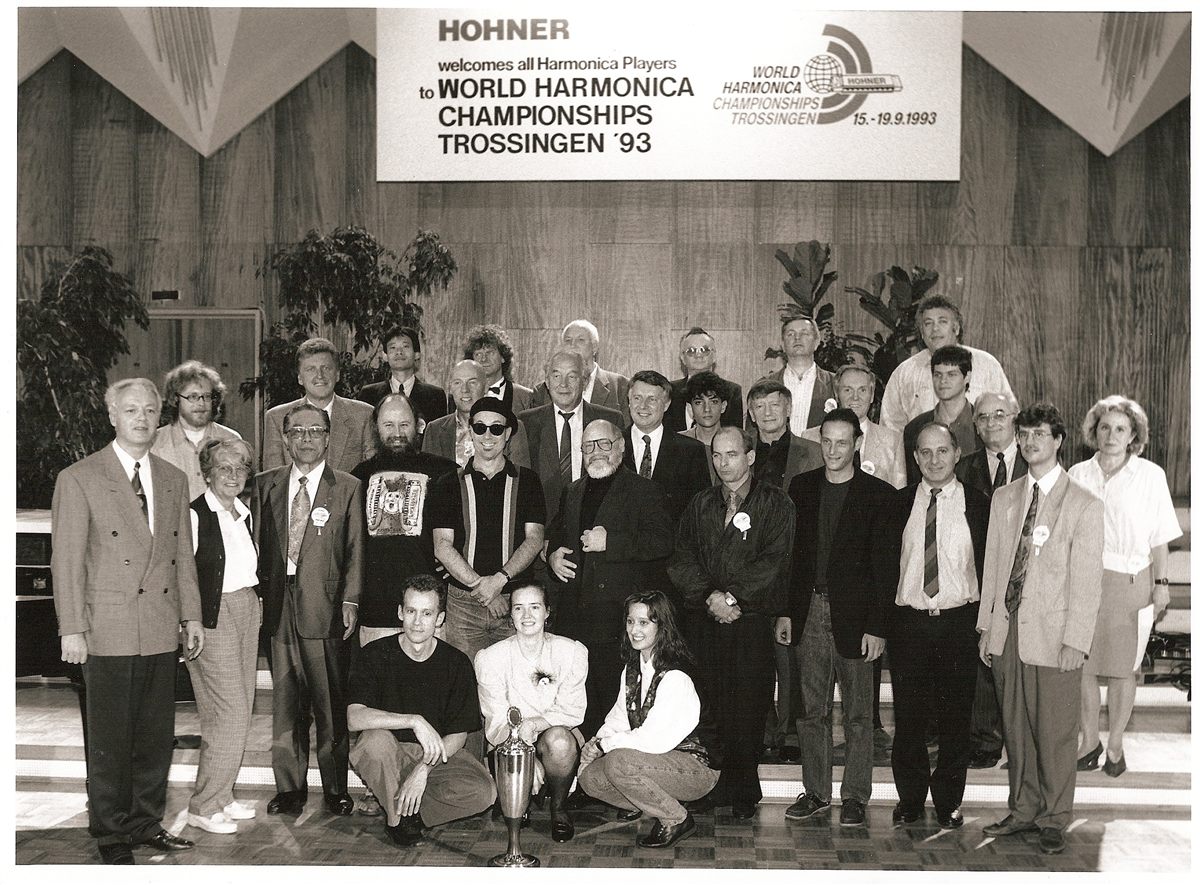
- 1993: Trossingen (Germany)
- 1995: Yokohama (Japan)
- 1997: Trossingen
- 1999: France (IHO), initially planned in Deauville but finally held in Paris, without competition (following the bankruptcy of FCD, the events company producing the Festival)
- 2000: Bournemouth (UK), "Millennium Harmonica Festival" (the IHO thus organising the championships which should have taken place in Deauville the year before)
- 2001: Trossingen (that year FIH took back the hand, in full agreement with IHO, for organizing the Championships every four years)
- 2005: Trossingen, consequently, for the last championships
Results
It would be unfair to begin this chapter without first paying tribute to the harmonica teachers without whom the following results could never have been achieved. Let us honour them for the teaching they have given to generations of pupils with self-denial, patience and dedication.
To name but a few, I am thinking of: Charles Rodriguez, Gérard Margnoux, Robert Deasey, René Gary, Tony Padovani, Pierre Rochat, Charles Braun, Pierre Couteau, Eddy Sowa... and more recently Jean Jacques Milteau, Sébastien Charlier and Greg Szlapczynski...
As the purpose of this article is to report on French performances, I begin with the very first results from my archives, going back to the 1950s, the starting point of these championships. That was 50 years ago: may those I might have forgotten forgive me.
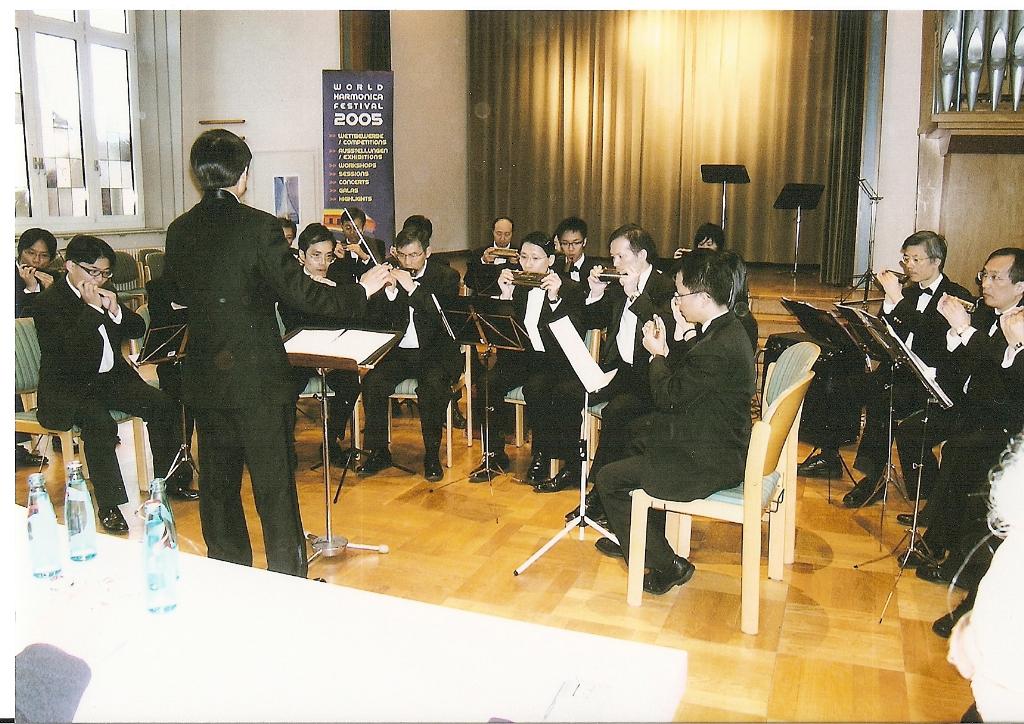
photo: the Hong Kong orchestra, gold medal in its category, Trossingen 2005.
French results, in chronological order:
1953 — Duisbourg (Germany)
Chromatic category (note that the diatonic "Richter" categories only appeared from the 1980s onwards).
- Bronze medal: René Gary, Gérard Margnoux, tied
1954 — Strasbourg (France)
- Gold medal, chromatic category: Jean Leleu
1955 — Winterthur (Switzerland)
- Gold medal, quartet category: Ensemble Valmy
- soloists: Jean Louis Emmenecker and Jean Kaeilen
- chord: Yvon Balkoni
- bass: Armand Steines
1959 — Innsbruck (Austria)
- Gold medal, trio category: Le trio Frank
- soloist: Jean-François Rigny
- chord: Guy Debionne
- bass: Christian Sauvageot
1965 — Delft (Holland)
- Gold medal, chromatic soloist category: Nicole Jordy
- Gold medal, trio category: Les Trois de l'Harmonica
- soloist: Pierre Couteau
- chord: Olivette Couteau
- bass: Jacques Filhol
- Silver medal, ensemble category: Ensemble Conservatoire des Gobelins, conducted by Pierre Rochat
1967 — Karlsruhe (Germany)
- Gold medal, ensemble category: Ensemble Conservatoire des Gobelins, with J. François Laurion, Bernard Poulverel, Josette Bellanger, Joseph Mallet, Aline Caron, Maurice Bailly, Joseph Ligault, Pascal Trubert, Bernard Klein, Guy Delsartre
- Silver medal, trio category: Trio Intermezzo
- soloist: Aline Caron
- chord: Jean-François Laurion
- bass: Maurice Bailly
After the interruption mentioned above, let us move on to the 1990s:
1991 — Detroit (USA)
- Gold medal, diatonic blues category: Michel Herblin
- Gold medal, diatonic open category: Michel Herblin
- Silver medal, diatonic blues category: Alain Massé
- Silver medal, duo category: Michel Herblin, Bernard Dubos
- 4th place, trio category: Magic Harmonic's
- soloist: Claude Meyer
- chord: Daniel Meyer
- bass: Angelo Schirmer
- 5th place, chromatic category with set piece: Eddy Sowa
- Special Jury Prize (unanimous): Jean Emilien (Madagascar)
All the prize-winners were members of France Harmonica, Jean Emilien included.
1993 — Trossingen (Germany)
- Bronze medal, chromatic category with set piece: Eddy Sowa
- 5th place: Jean-Claude Boireau
- Bronze medal, blues/rock category: Joël Hanriot
- 5th place, diatonic/folk category: Alain Massé
- 4th place, jazz category: Alain Massé
- Silver medal, duo category: Jean-Claude Boireau, Pierre Couteau
- 4th place: Jean-Claude Boireau, René Haboyan
- Silver medal, trio category: Magic Harmonic's (same line-up as in Detroit)
- Silver medal, chamber music category: Norsk Munnspill Ensemble, with Eddy Sowa as chromatic soloist
- Bronze medal, chamber music category: Ensemble Haboyan, Boireau, Potier
All these prize-winners were members of France Harmonica.
1995 — Yokohama (Japan)
- Gold medal, diatonic/open category: Joël Hanriot
- Bronze medal: Alain Massé
- 5th place: Marceau Grégoire
- Gold medal, folk/country category: Joël Hanriot
- Silver medal: Alain Massé
- Bronze medal, blues/rock category: Joël Hanriot
- Silver medal, chromatic jazz category: Joël Hanriot
- 5th place: Guy Meney
- Gold medal, trio category: Magic Harmonic's (same line-up as before)
- 5th place: Trio Hi Fi Dixon's
- soloist: Jean Héry
- chord: Christian Briquet
- bass: Fernand Charpentier
- Bronze medal, chromatic category with set piece: Eddy Sowa
- Bronze medal, future category: Daniel Ounis
All the prize-winners were members of France Harmonica.
1997 — Trossingen (Germany)
- Gold medal, junior chromatic category (set piece): Alexandre Thollon (pupil of Eddy Sowa)
- 5th place: Antoine Leroux
- Bronze medal, orchestra category: Harmonica 17
- 4th place, chromatic jazz category: Ricardo Moreno
All the prize-winners were members of France Harmonica.
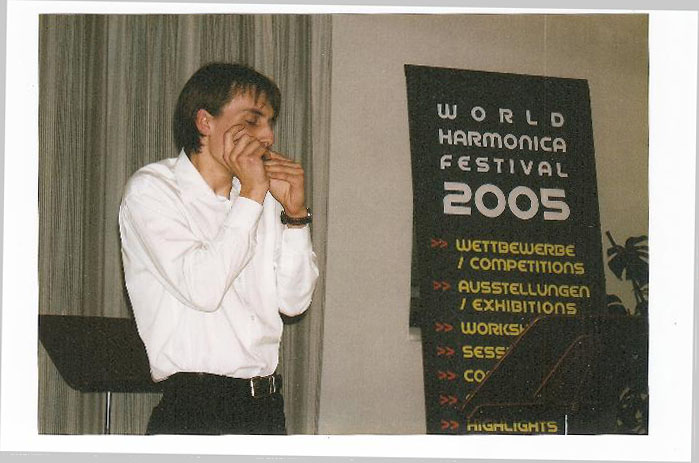
2001 — Trossingen (Germany)
- Gold medal, chromatic category with set piece: Alexandre Thollon
- Gold medal, free chromatic category: Laurent Maur
- Gold medal, chromatic jazz category: Laurent Maur
- Silver medal: Ricardo Moreno
- 5th place: Antoine Leroux
- Gold medal, diatonic/jazz category: Alexandre Thollon
- 5th place: Laurent Valette
- Silver medal, tremolo category: Nao Nakamura
- 4th place, quartet category: Harmonica 17
All the prize-winners were members of France Harmonica, except Laurent Valette. Nao Nakamura, who lived in France, was a pupil of Eddy Sowa.
2005 — Trossingen (Germany)
- Silver medal, chromatic category: Antoine Leroux
- 5th place, orchestra category: Harmonica 17
Jury
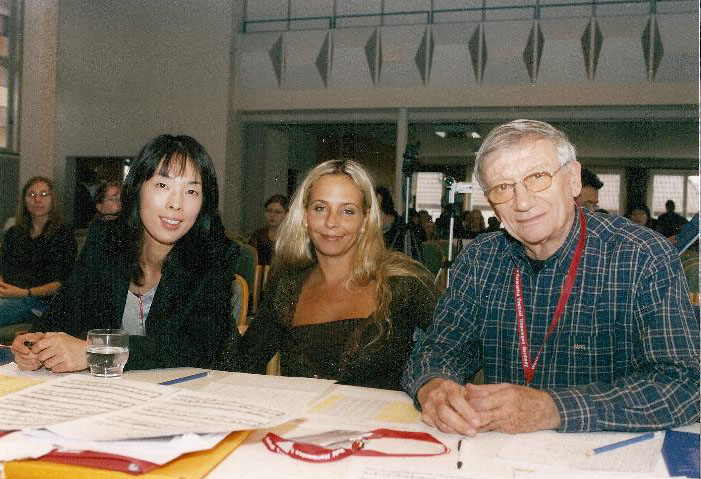
The competition jury is made of a representation of harmonica players and musicians coming from everywhere around the world, who, during 4 days, have to do a considerable work, to decide, with impartiality, between hundreds of competitors, divided in 10 (or more) categories.
I have been jury member for 25 years. People have generally a confused approach to the member of a jury role. I'm giving you here more information concerning the work of a world championship jury:
The jury is made up of qualified adjudicators. They have been appointed by the festival organization. The organization committee is supervising the jury. The jury in each category is made of at least generally three members. They elect a foreman. The adjudicators are responsible for evaluating the entries according to the guidelines stated in the regulations. The juror decision is strictly confidential and final. Each adjudicator member is obliged to attend the juror's meeting before, during and after the competition in order to discuss procedure and evaluate entries.
The criteria for the notation of the competitors generally are:
- MEMORY: secure, choice of the piece
- ACCURACY: knowledge of music, notes, cleanliness, phrasing, dynamics, legato, staccato
- RHYTHM: continuity, correctness of beat/count, tempo
- TECHNIQUE: holding of the harmonica, tongue blocking, puckering, breath control, tonguing, intonation, vibrato: hand, throat, lip
- MUSICIANSHIP/MUSICALITY: interpretation, style, tone quality, articulation, appropriate tempo
- GENERAL EFFECT: stage presence, appearance, poise attitude, body position, music too easy, difficult
Rating: points are given by the adjudicator on a personal rating sheet (the preceding 6 points were the criteria selected for the 1991 Detroit Championships).
(photo: Trossingen World Championships 2005: Naoko Takeuchi/Japan, Michal Gronich/Israël, J. Labre, adjudicators)
Consequently, the taste and the appreciation of the public, the spectators, will never be the same to the ones of the adjudicators. It's technically impossible. People are noticing it constantly in all public shows and contests.
Nevertheless, we ought to have confidence in our championships adjudicators, they fully deserve it.
Other World Competitions
The success of the World Championships has created a dynamic all over the world and given the idea of organizing competitions on the same concept to different countries.
Particularly in the far East, where countries are very much engaged in musical education... competition spirit at the key, often from the primary school!
In these countries, medias are very interested in this cultural and very popular phenomenon and consequently... sponsors also!
That is the reason why the Asia World Festival is holding the maximum score concerning visitors, for instances:
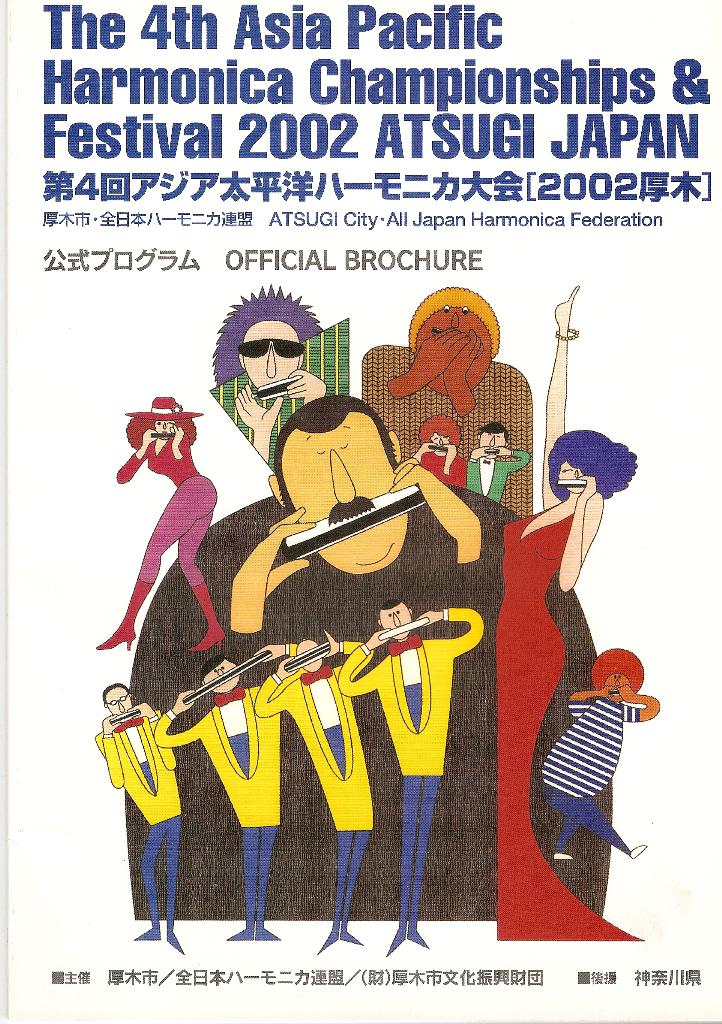
— 2002, 26000 entrances registered in the Atsugi (Japan) 4th Asia Festival.
— 2004, 1585 competitors registered in the Hong Kong Festival.
— 2010, 2530 competitors registered in the 8th Singapore Festival Championships.
In the West, Trossingen holds the attendance record for the world championships, with an average of 3,500 visitors (record: 3,898) and 350 competitors.
You must not think that we are in front of a number of visitors competition between West and Far East... on the contrary, you must realise that now, there is a positive and efficient complementarity, for the best of the future of our Harmonica Planet.
Trossingen 2009
The "rendez-vous" is already taken. Don't miss this out of the common traditional event.
Like the Grand Canyon or the Taj Mahal, Trossingen cannot be described. It's like a pilgrimage, lived intensely and kept engraved forever in one's memory.
Note: I must admit a preference for the name "World Competitions". But when this event was created, the discussions were held in English, and the name "Championships" was chosen.
Photos: IHO, Swaran Singh Arri, AJHF